
Beyond Cape Town: 10 South African Places Worth Adding to Your Journey
For many travellers, a first journey to South Africa begins with Cape Town, the Cape Winelands and perhaps a few unforgettable days on safari. And while each deserves its place on any South African wish list, they are only the beginning.
Travel beyond the familiar routes and South Africa reveals an extraordinary collection of landscapes and experiences: quiet mountain valleys, vast semi-desert plains, wild coastlines, historic towns, ancient forests and places where the night sky seems to stretch forever.
This is a country that rewards curiosity. It invites you to slow down, take the road that isn’t always on the standard itinerary, and discover places that feel completely different from the one you left only a few hours earlier.
If you’re planning your first — or even your second — journey here, these 10 South Africa travel destinations are worth looking beyond Cape Town for.
1. The Cape Winelands — More Than a Glass of Wine
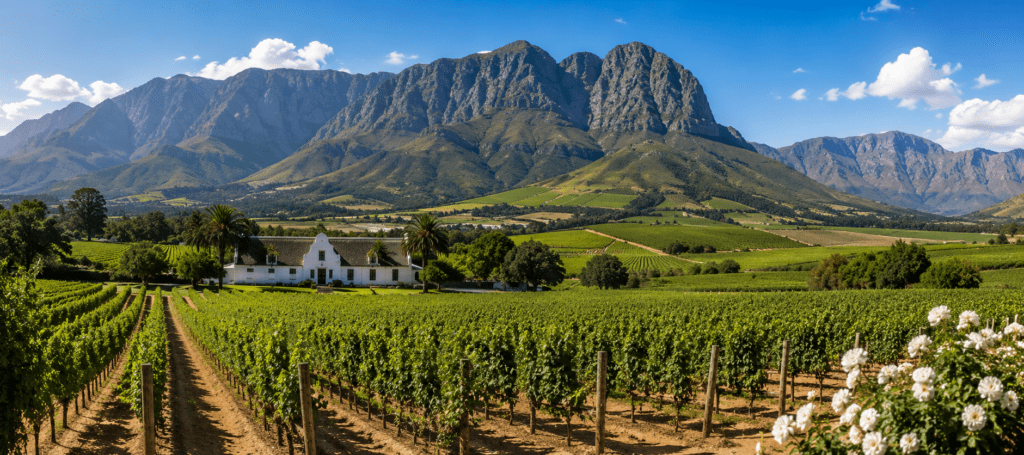
Just beyond Cape Town, the landscape begins to change. Mountains rise behind rows of vines, whitewashed Cape Dutch homesteads sit beneath ancient oak trees, and some of South Africa’s most beautiful towns invite you to stay a little longer than you planned.
Franschhoek may be celebrated for its wine, but its appeal reaches far beyond the cellar door. Excellent restaurants, galleries, boutique hotels and historic estates make it a wonderful place to slow down for a few days. Nearby Stellenbosch brings its own character, with oak-lined streets, beautiful architecture and a history stretching back centuries.
Of course, the wine remains part of the experience. But rather than racing from one tasting to another, consider choosing a handful of estates and taking your time — enjoying a long lunch overlooking the vineyards, discovering smaller producers or simply sitting beneath the trees with the mountains in the distance.
The Cape Winelands are at their best when they aren’t treated as a day trip to tick off a list. Stay a night or two, unpack your suitcase, and allow yourself to settle into the rhythm of the region.
2. The Garden Route — Where the Journey Is Part of the Destination
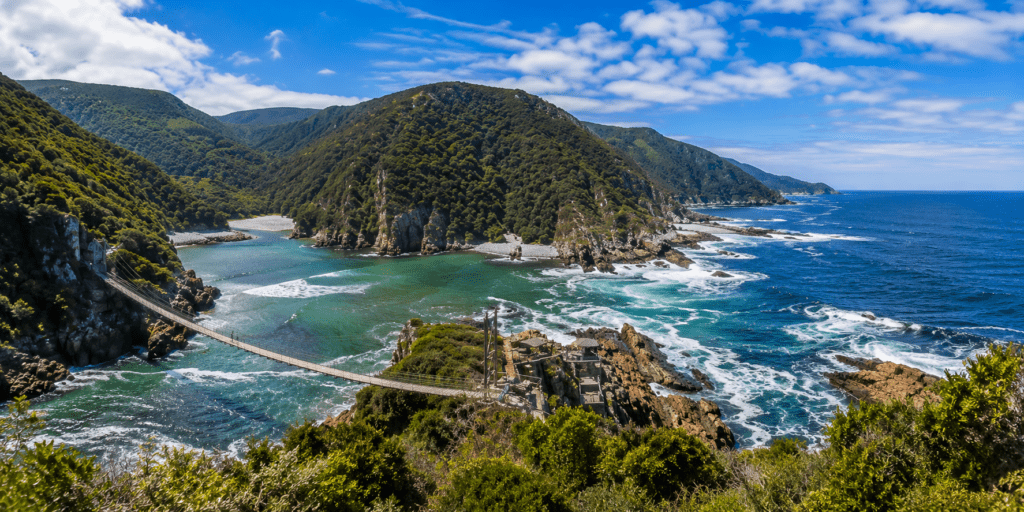
There are road trips where the aim is simply to reach the next destination. The Garden Route isn’t one of them.
Stretching along South Africa’s southern coastline, this is a journey of forests, beaches, lagoons, mountain passes and small coastal towns — with plenty of reasons to pull over, change your plans and linger somewhere unexpected.
Knysna and Plettenberg Bay are well-known stops, but some of the Garden Route’s most memorable experiences are found between the headline destinations. Walk beneath ancient trees, follow a forest trail, stop at a quiet beach or continue east towards Tsitsikamma, where indigenous forest meets a wonderfully dramatic coastline.
For travellers who enjoy nature without sacrificing comfort, the region works particularly well. Boutique guesthouses, intimate lodges and excellent restaurants make it easy to combine days outdoors with relaxed evenings and beautiful places to stay.
Most importantly, don’t rush it. The Garden Route deserves more than a drive between Cape Town and a safari lodge. Give yourself time for detours, spontaneous stops, and the simple pleasure of watching South Africa unfold beyond the car window.
3. The Central Drakensberg — Mountains That Stay With You
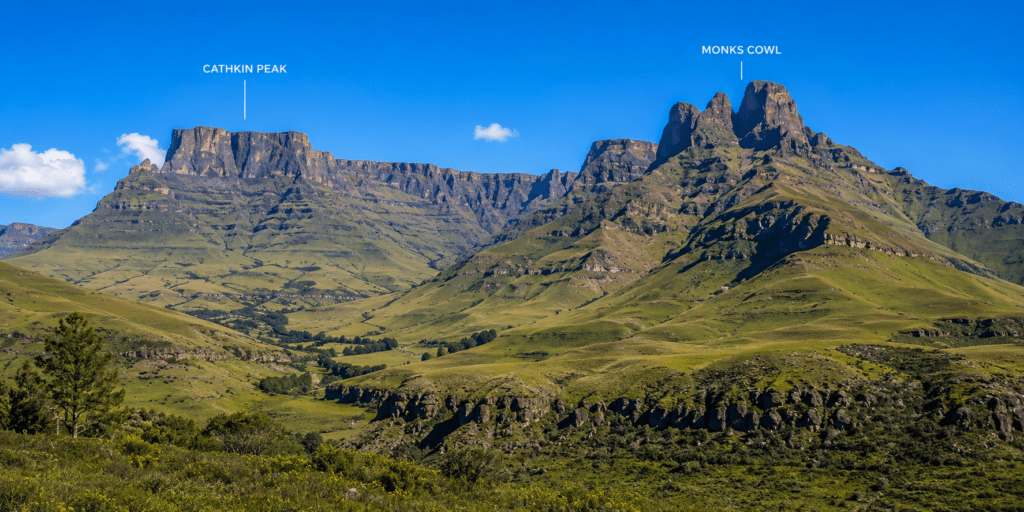
There are some landscapes you admire, and others that somehow become part of you. For me, the Drakensberg belongs firmly in the second category.
My grandparents had a farm near Bell Park Dam in the Champagne Valley, and this extraordinary corner of the Central Drakensberg became my childhood playground during school holidays. Perhaps that is why, even now, there is something about the sight of those mountains that feels like coming home.
For travellers, the appeal is easy to understand. The Central Drakensberg is a landscape of soaring peaks, green valleys, rivers and walking trails, with scenery that changes dramatically with the seasons. Summer brings lush landscapes and afternoon storms, while winter can transform the highest peaks with snow beneath brilliant blue skies.
You don’t need to be an experienced hiker to appreciate it. There are trails for different abilities, scenic drives, horse riding, and plenty of places where doing very little is part of the pleasure. Choose a beautiful lodge or country retreat, order a glass of South African wine and simply watch the light move across the mountains.
The Drakensberg is also a place worth giving time to. Stay for several nights rather than passing through, breathe in the mountain air, and allow the landscape to set the pace.
For me, it will always hold childhood memories. For someone discovering it for the first time, it may just become one of those unexpected places that stays with you long after you’ve returned home.
4. The Karoo — Where Silence Becomes Part of the Journey

At first, the Karoo can appear almost empty. Drive a little further, stay a little longer, and you begin to realise that its emptiness is precisely what makes it extraordinary.
This vast semi-desert region stretches across the heart of South Africa, where long roads disappear towards distant mountains, windmills punctuate the landscape, and small towns seem to exist at an entirely different pace. Out here, silence isn’t something missing from the experience — it is part of it.
Historic towns such as Graaff-Reinet and Prince Albert offer beautiful old architecture, character-filled guesthouses and a glimpse into rural South African life. The Karoo is also known for wonderfully hearty food, from traditional lamb dishes to farm-style cooking that feels perfectly suited to the landscape.
But some of its greatest pleasures are remarkably simple. Watch the colours change across the plains as the sun begins to set. Sit outside after dinner when there is almost no sound around you. And once darkness falls, look up — away from the lights of the cities, the Karoo night sky can be magnificent.
For travellers accustomed to busy itineraries, the Karoo offers something increasingly rare: space to stop.
It isn’t a destination that demands a long list of things to do. It simply asks you to slow down enough to notice where you are.
5. Namaqualand — When the Desert Bursts Into Bloom
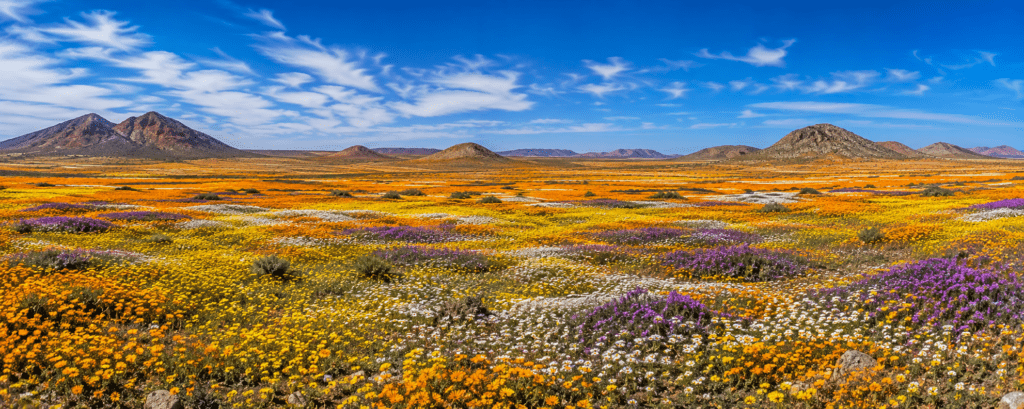
For much of the year, Namaqualand is a landscape of quiet, semi-arid plains and rugged mountains. Then, for a few extraordinary weeks, everything changes.
Following the winter rains, usually between June and August, vast areas of the landscape can erupt into colour that peeks between August and September. Carpets of orange, yellow, white and purple wildflowers stretch across fields that only months earlier appeared dry and almost empty.
The spectacle is beautiful, but part of its magic lies in its unpredictability. This isn’t a manicured garden with a guaranteed flowering date. Rainfall, temperature and sunshine influence when and where the best displays appear, which means a little flexibility can make all the difference.
For travellers who time their journey well, Namaqualand offers one of South Africa’s most remarkable seasonal experiences. Drive slowly, stop in small towns along the way and allow time for places such as Namaqua National Park, where flowers, rocky landscapes and enormous skies come together.
And don’t spend the entire journey looking through a camera lens. Find somewhere quiet, step out of the car, and simply stand among the flowers for a while.
Some journeys are memorable because of where you go. Namaqualand is memorable because you happen to be there at exactly the right moment.
6. The Wild Coast — South Africa at Its Most Untamed
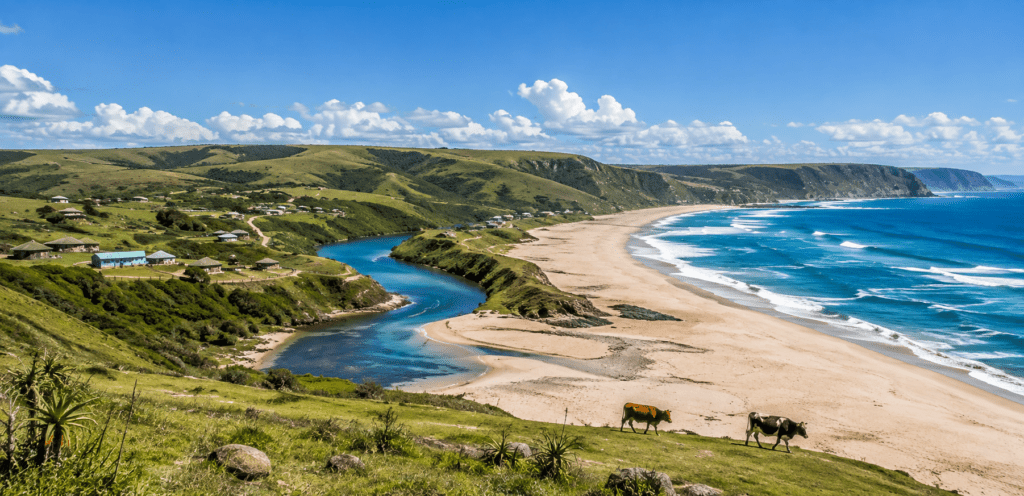
Along South Africa’s Eastern Cape lies a coastline that feels remarkably different from the polished beaches and busy waterfronts found elsewhere in the country.
The Wild Coast lives up to its name. Green hills tumble towards the Indian Ocean, rivers wind through deep valleys, and long stretches of beach remain wonderfully undeveloped. Small rural communities dot the landscape, while cattle sometimes wander across beaches that seem to stretch endlessly towards the horizon.
Places such as Coffee Bay and the dramatic Hole in the Wall have become better known, but this isn’t a region best experienced by racing between landmarks. Its appeal lies in the landscape itself — coastal walks, quiet beaches, rolling hills and the feeling of having travelled somewhere that still moves according to its own rhythm.
The Wild Coast also offers an opportunity to experience another side of South Africa, including the culture and traditions of the Xhosa communities that have shaped this region for generations. As with any culturally rich destination, the most rewarding experiences are those approached with curiosity, respect and a willingness to listen.
Getting here can require more planning than visiting South Africa’s better-known destinations, and some roads are considerably slower than the map might suggest. But that is precisely why the Wild Coast remains so special.
For travellers willing to venture beyond the familiar route, this is South Africa with some of its rough edges beautifully intact.
7. The Panorama Route — A Road Trip Above the Clouds
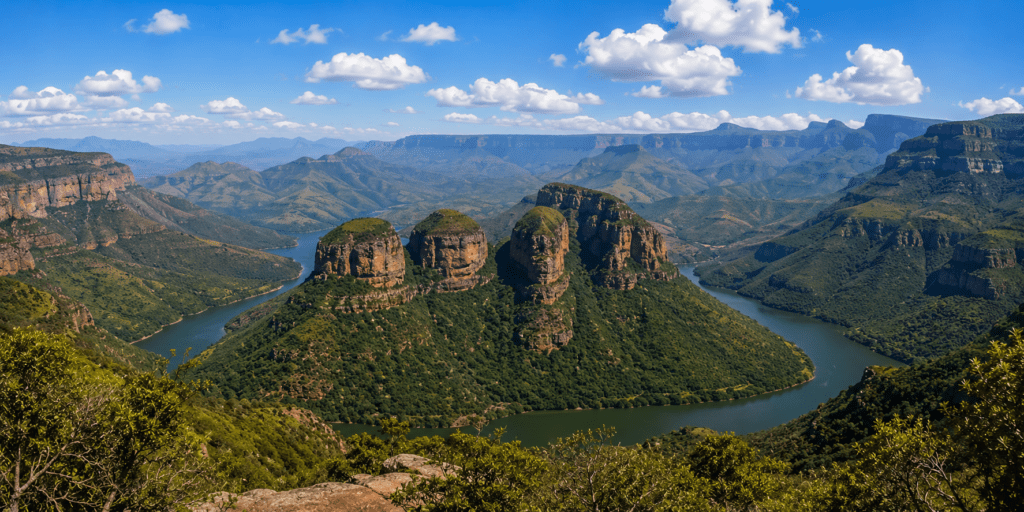
In Mpumalanga, the landscape rises dramatically towards the escarpment before dropping away into the vast Lowveld below. Following its edge is one of South Africa’s most spectacular scenic drives: the Panorama Route.
The magnificent Blyde River Canyon is the star of the journey. Viewpoints such as the Three Rondavels reveal enormous cliffs, deep valleys and sweeping views that seem to continue forever. Elsewhere along the route, waterfalls tumble through forested landscapes and unusual rock formations reveal millions of years of geological history.
God’s Window, Bourke’s Luck Potholes and the waterfalls around Sabie and Graskop are well-known stops, but this is another South African journey where the road between them matters just as much. Give yourself time to pull over, take short walks, and enjoy viewpoints without constantly watching the clock.
The Panorama Route works particularly well as part of a longer journey through Mpumalanga. Rather than flying directly to a safari and leaving again, spending a day or two exploring the escarpment allows you to experience an entirely different landscape before continuing towards the wildlife reserves of the Greater Kruger region.
One morning you can be standing above a canyon surrounded by mountains and waterfalls. Not long afterwards, you could be watching elephants move quietly through the African bush.
That contrast is one of South Africa’s greatest pleasures.
8. The Kalahari — Red Dunes and Endless Skies
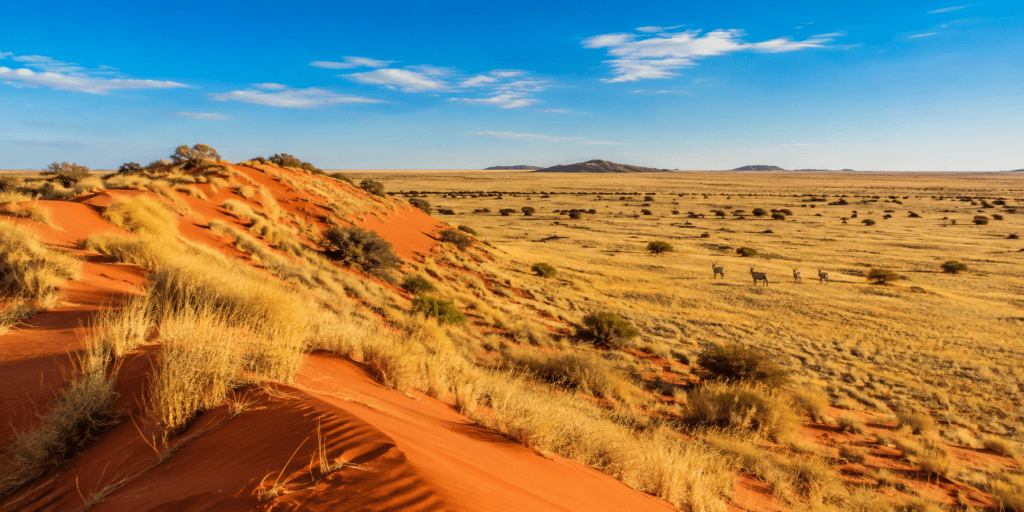
There is something wonderfully humbling about a landscape that seems to have no end.
In South Africa’s far north-west, the Kalahari stretches beneath enormous skies, its red dunes broken by pale grasslands, dry riverbeds and hardy vegetation adapted to an unforgiving environment. The colours alone make the journey memorable — particularly in the early morning and late afternoon, when the desert seems to glow.
For wildlife lovers, Kgalagadi Transfrontier Park offers a very different safari experience from the greener landscapes many visitors associate with South Africa. Animals gather along the dry Auob and Nossob riverbeds, while the open terrain creates wonderful opportunities for patient wildlife watching.
This is renowned predator country. Lions, cheetahs and leopards inhabit the region, alongside gemsbok, springbok, giraffes and an extraordinary variety of birds. But the Kalahari isn’t only about finding the next animal. Some of its greatest moments happen when there appears to be almost nothing happening at all.
Stop the vehicle. Turn off the engine. Listen to the silence.
Then stay outside a little longer after sunset. Far from the glow of major cities, the night sky becomes part of the experience — a vast canopy of stars stretching above an equally vast landscape.
The Kalahari requires more effort to reach than South Africa’s most familiar safari destinations. For the right traveller, that remoteness isn’t an inconvenience. It’s precisely the reason to go.
9. Zululand & Northern KwaZulu-Natal — Where Safari Meets the Sea
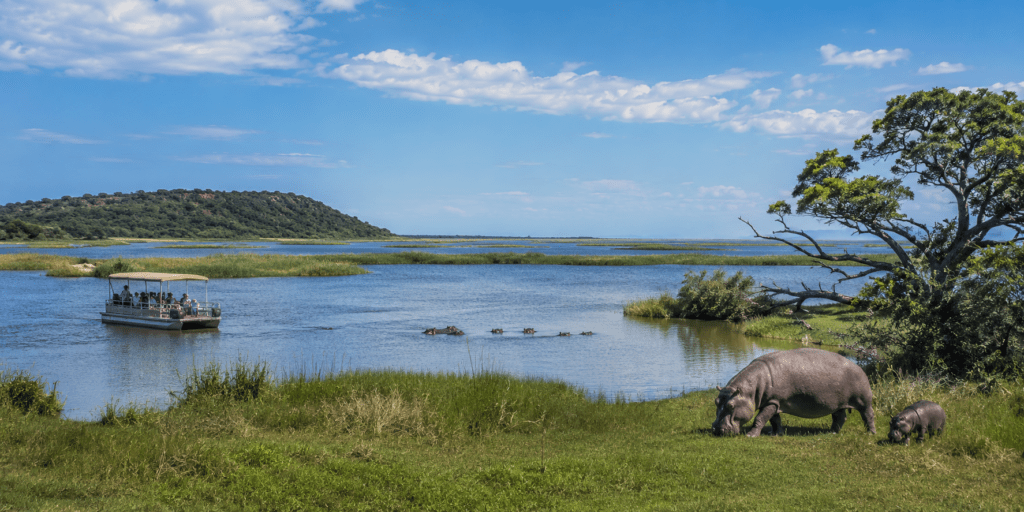
In northern KwaZulu-Natal, some of South Africa’s most distinctive landscapes sit remarkably close together. Wildlife reserves, wetlands, lakes, coastal forests and warm Indian Ocean beaches make it possible to experience several completely different sides of the country within one journey.
Hluhluwe-iMfolozi Park is one of the region’s great wildlife destinations and has played an important role in rhino conservation. Its rolling hills create a very different safari landscape from the open plains many first-time visitors imagine when they picture Africa.
Travel further towards the coast, and the scenery changes again. The iSimangaliso Wetland Park encompasses an extraordinary collection of ecosystems, from Lake St Lucia and its hippos and crocodiles to forested dunes, wetlands and beaches along the Indian Ocean.
This is also a region with a rich Zulu cultural heritage. Thoughtfully chosen community-led and cultural experiences can add another dimension to a journey, offering visitors an opportunity to learn about the people, history and traditions of KwaZulu-Natal rather than experiencing the region purely through its landscapes and wildlife.
For travellers with enough time, northern KwaZulu-Natal offers an enticing alternative to the familiar fly-in, fly-out safari. Spend a few days watching wildlife, explore the wetlands and then continue towards the coast.
Few journeys allow you to begin the morning searching for rhino and end the day with the Indian Ocean stretching towards the horizon.
10. The Overberg — The Cape Beyond Cape Town
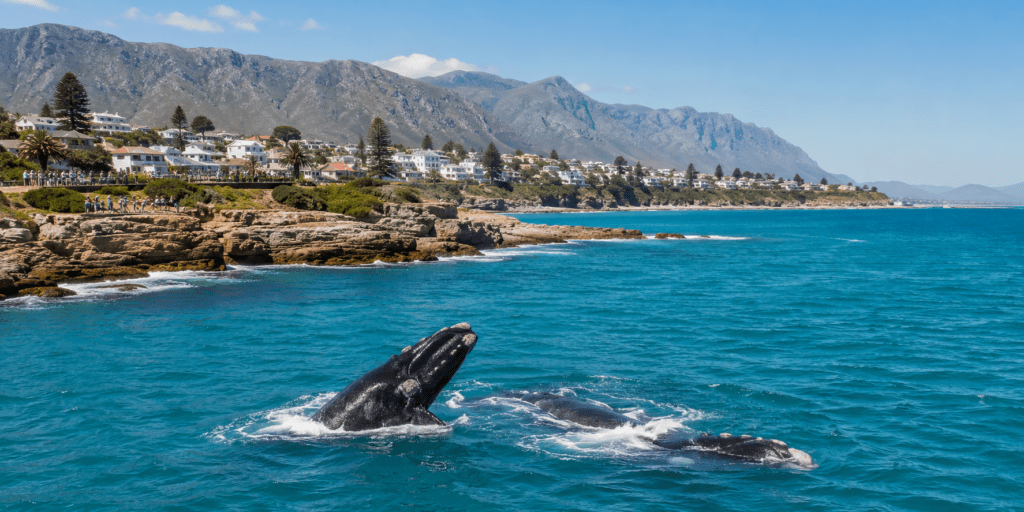
Leave Cape Town behind and follow the coast east, and it doesn’t take long for the landscape to begin feeling wonderfully different.
The Overberg stretches across mountains, farmland, vineyards and a magnificent section of coastline. It’s close enough to Cape Town to be easily incorporated into a journey, yet varied enough to deserve several days rather than a hurried excursion.
Hermanus is perhaps its best-known destination, particularly during whale season, when southern right whales migrate into the waters of Walker Bay. But there is much more to discover beyond the town’s famous cliff paths. Nearby Stanford offers a quieter village atmosphere, while the Hemel-en-Aarde Valley combines beautiful scenery with cool-climate vineyards and excellent food.
Continue south-east, and eventually you reach Cape Agulhas, where the African continent comes to an end, and the official dividing line between the Atlantic and Indian Oceans is found. The coastline here feels wilder and more exposed — a fitting place to stand and appreciate just how enormous this country really is.
Nature lovers can explore coastal reserves and walking trails, food lovers can linger over farm stalls and long lunches, and travellers who simply want to slow down will find plenty of small guesthouses and country retreats where there is very little reason to hurry.
Perhaps that is the best thing about the Overberg. You don’t need to travel across the country to discover somewhere completely different.
Sometimes, you simply need to keep driving beyond Cape Town.
Your South Africa Doesn’t Have to Look Like Everyone Else’s
The hardest part about planning a journey through South Africa isn’t finding somewhere worth visiting. It’s deciding what to leave out.
This is an enormous country, and trying to squeeze Cape Town, the Winelands, the Garden Route, the Drakensberg, safari, and several other regions into one journey can quickly turn an extraordinary holiday into a race between destinations.
Instead, start with the experiences that matter most to you.
Perhaps it’s waking to mountain views in the Drakensberg. Maybe it’s lingering over lunch on a wine estate, watching elephants at a waterhole, walking through spring wildflowers, driving an empty Karoo road, or standing beside the Indian Ocean with nowhere you need to be.
Your journey doesn’t need to include everything.
It simply needs to include the places that make South Africa unforgettable for you.
And sometimes the most memorable journey begins when you look beyond the places everyone tells you to visit.
Ready to Discover Your South Africa?
Whether you’re dreaming of mountains and wildlife, food and wine, wild coastlines or a little of everything, Seat2Sky can help you shape a South African journey around the way you want to travel.
No two journeys need to look the same. We’ll help you decide where to go, how long to stay, and how to bring the different pieces together — without turning your holiday into a checklist.
Extraordinary journeys begin with a conversation.