
South Africa: The World in One Country
From wild coastlines and mountain-framed vineyards to unforgettable safaris and vibrant cities, South Africa feels like many journeys
wrapped into one extraordinary destination.
What if one journey could give you almost everything?
Imagine waking beneath the unmistakable silhouette of Table Mountain, spending the afternoon among vineyards framed by dramatic mountains, following a road where cliffs tumble towards the ocean, and ending your journey beneath an enormous African sky as elephants wander quietly across the bush.
In South Africa, these experiences don’t belong to different holidays. They can all belong to the same one.
Few destinations offer such an extraordinary variety of landscapes, cultures and experiences within a single country. Cosmopolitan cities sit beside wild coastlines. Vineyards stretch through historic valleys. Mountains give way to vast semi-desert plains, forests and wildlife reserves. Along the way are remarkable food, fascinating history, warm hospitality and communities shaped by an extraordinary mix of cultures and traditions.
South Africa is often introduced to travellers through safari — and seeing Africa’s wildlife in the wild is undoubtedly one of the country’s great experiences.
But it is only the beginning.
This is a country made for road trips, long lunches, railway journeys, mountain escapes, coastal adventures, wildlife encounters and those unexpected moments that often become the memories you treasure most.
Perhaps that is why South Africa is so difficult to describe as just one destination.
It feels like a world in one country.
Cape Town — Where Mountains
Meet the Ocean

Few cities in the world have a setting quite like Cape Town.
Table Mountain rises dramatically above the city while the Atlantic Ocean stretches towards the horizon, creating a place where urban life and extraordinary natural beauty exist side by side. You can spend the morning exploring colourful neighbourhoods and historic streets, and by afternoon find yourself standing on a mountain trail or watching waves roll onto a quiet beach.
But Cape Town rewards travellers who venture beyond its famous landmarks.
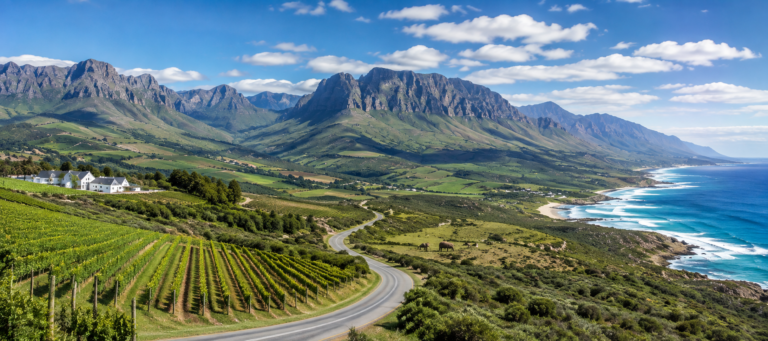
Follow the coastline around the Cape Peninsula and the city slowly gives way to fishing villages, rugged mountains and spectacular ocean views. Chapman’s Peak Drive curves between towering cliffs and the Atlantic, while further south the landscapes become increasingly wild as you journey towards Cape Point and the Cape of Good Hope.
Back in the city, another side of Cape Town emerges through its food, history and culture. From the brightly painted streets of Bo-Kaap and the story of District Six to bustling food markets, independent restaurants and the flavours of Cape Malay cuisine, this is a city best experienced slowly.
And then there are the simple moments: watching the sun disappear into the Atlantic, enjoying seafood beside the ocean, or looking back towards Table Mountain and realising just how remarkable Cape Town’s setting really is.
For many travellers, Cape Town is the gateway to South Africa.
It could quite easily be a journey in itself.
Discover more about Cape Town →
The Cape Winelands — More Than Just Wine
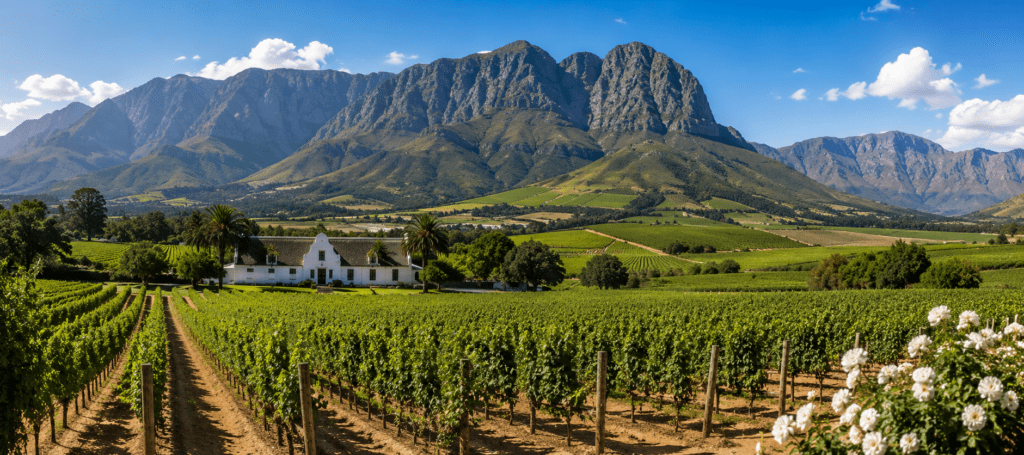
Less than an hour from Cape Town, the landscape changes again.
Vineyards sweep across green valleys beneath rugged mountain ranges, historic Cape Dutch buildings sit among centuries-old oak trees, and some of South Africa’s most beautiful towns invite you to slow down and stay awhile.
Stellenbosch and Franschhoek may be famous for their wines, but the Cape Winelands offer far more than what is poured into a glass.
This is a region of beautiful estates, exceptional restaurants, farm-to-table dining, art galleries, boutique hotels and long, leisurely lunches overlooking the vines. Historic streets and architecture tell stories stretching back centuries, while mountain trails, gardens and scenic drives reveal another side of the region entirely.
Of course, wine remains part of the experience. From internationally recognised estates to smaller family-run vineyards, tastings offer an opportunity not simply to sample South African wines, but to discover the landscapes, people and stories behind them.
And perhaps that is the real pleasure of the Winelands.
There is no need to rush.
Spend the morning wandering through Stellenbosch, enjoy lunch beneath the mountains, explore a wine estate in the afternoon and end the day watching the changing light across the Franschhoek Valley.
Sometimes the most memorable travel experiences are the ones that leave room to simply enjoy where you are.
Discover the Cape Winelands →
The Coast — A Road Trip You’ll Never Forget
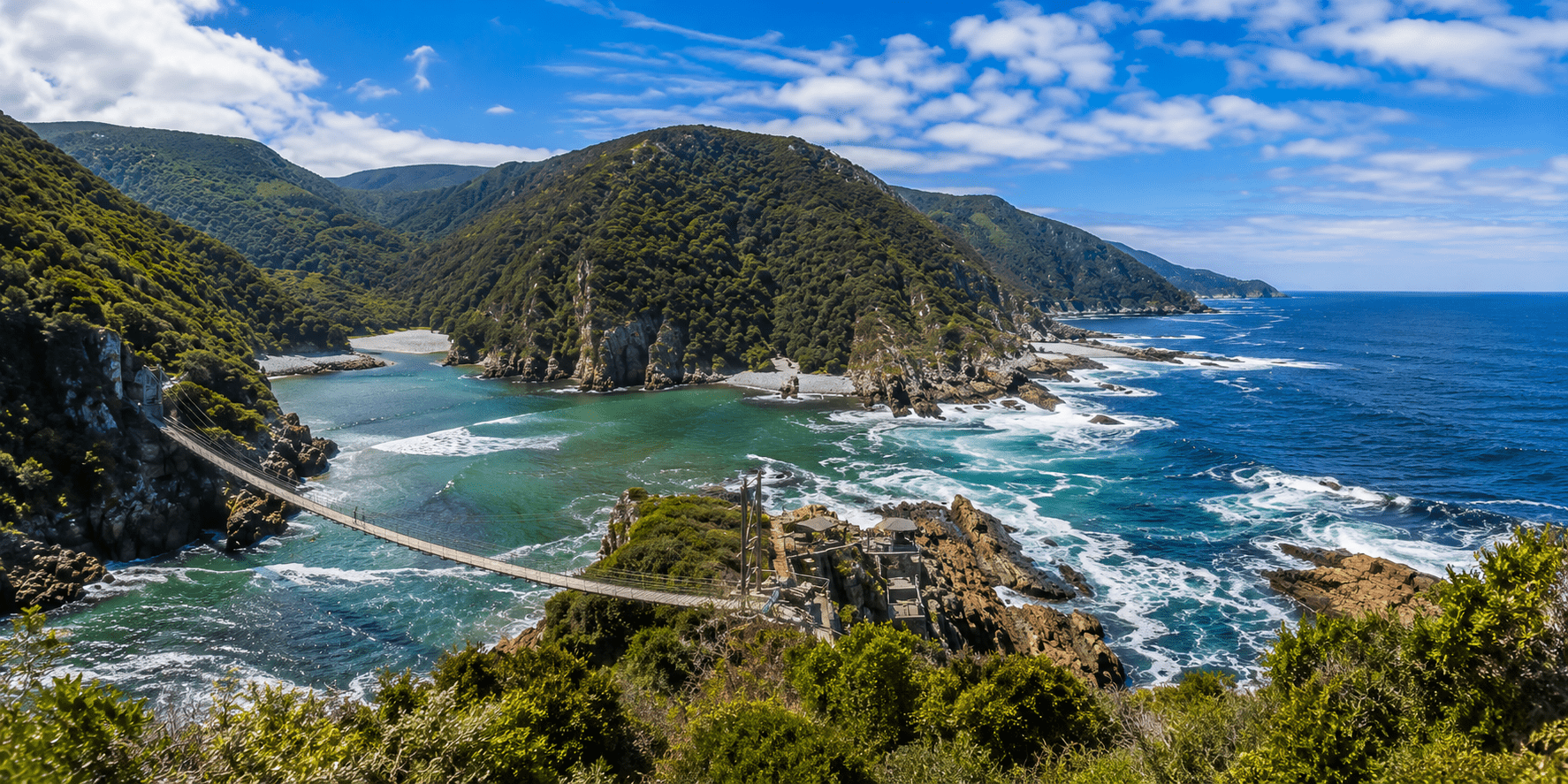
In South Africa, sometimes the road itself becomes part of the destination.
Travel east from Cape Town, and the landscapes seem to reinvent themselves around every bend. Mountain passes give way to farming valleys, quiet seaside towns and long stretches of coastline where the Indian Ocean meets forests, cliffs and sandy beaches.
The Garden Route is one of South Africa’s great road trips, stretching through a part of the country where journeys are measured as much by the places discovered along the way as by the final destination.
Stop in coastal towns, walk beneath ancient indigenous forests, look for whales and dolphins from the shore, paddle across peaceful lagoons or simply pull over when another extraordinary view appears around the next corner.
Further east, the forests of Tsitsikamma seem to tumble towards the ocean. Walking trails follow the rugged coastline, rivers carve their way through deep gorges and the landscape feels wonderfully wild.
But one of the pleasures of travelling this part of South Africa is not having to fill every day.
There is something special about leaving time for an unexpected farm stall, a quiet beach, a small restaurant overlooking the water or a detour you hadn’t planned to take.
Because on a South African road trip, getting there can be every bit as memorable as arriving.
Explore South Africa’s Garden Route →
The Karoo — South Africa’s Beautiful Empty Spaces

Then there is the Karoo.
A landscape so vast and open that the horizon seems impossibly far away.
Stretching across a huge part of South Africa’s interior, the Karoo is a place of semi-desert plains, rugged mountains, winding passes and small towns separated by long stretches of beautiful emptiness.
Here, travel takes on a different rhythm.
The roads are quieter. The skies seem bigger. Historic farmhouses, tiny roadside towns and old railway settlements appear unexpectedly in landscapes where little seems to have changed for generations.
By day, the Karoo reveals subtle colours and enormous views. As evening approaches, mountains and plains turn shades of gold and copper. And when darkness finally arrives, the absence of city lights can reveal a night sky filled with more stars than you imagined possible.
There are wonderful places to discover along the way — towns such as Prince Albert and Graaff-Reinet, dramatic mountain passes, nature reserves and farms where Karoo hospitality is accompanied by the kind of food that belongs completely to the landscape around it.
But perhaps the greatest attraction of the Karoo is something much simpler.
Space.
The freedom to slow down, follow an empty road towards the horizon and experience a part of South Africa where silence is not an absence of something.
It is part of the experience.
Discover the Karoo →
Namaqualand — When the Desert Bursts Into Bloom
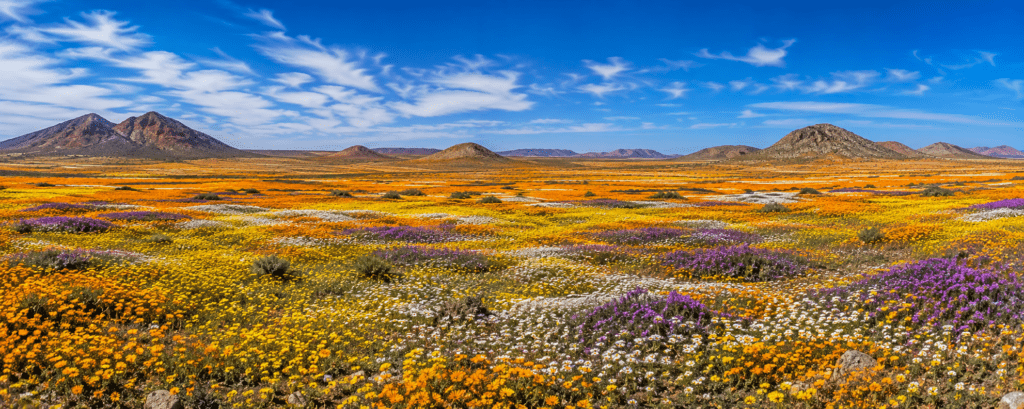
And then, almost impossibly, the landscape changes again.
For much of the year, Namaqualand is a vast, semi-arid region of rugged mountains, open plains and seemingly endless horizons. But with the arrival of spring, something extraordinary can happen.
Wildflowers begin to appear.
Soon, entire landscapes can be transformed into carpets of orange, yellow, white and purple, stretching across valleys and hillsides beneath enormous blue skies. What was once dry and understated suddenly becomes one of South Africa’s most spectacular natural displays.
The flower season is wonderfully unpredictable. Its timing and intensity depend on winter rainfall, temperatures and the rhythms of nature, making every year slightly different. For travellers fortunate enough to experience the landscape in bloom, that unpredictability is part of the magic.
Namaqualand is not simply about photographing flowers, either. Slow down, follow quiet country roads, explore small towns and nature reserves, and take time to notice how many different species can exist within what initially appears to be one enormous blanket of colour.
It is another reminder that South Africa rarely stays the way you expect it to.
Even the desert can surprise you.
Experience Namaqualand →
Safari — Seeing Africa Come Alive
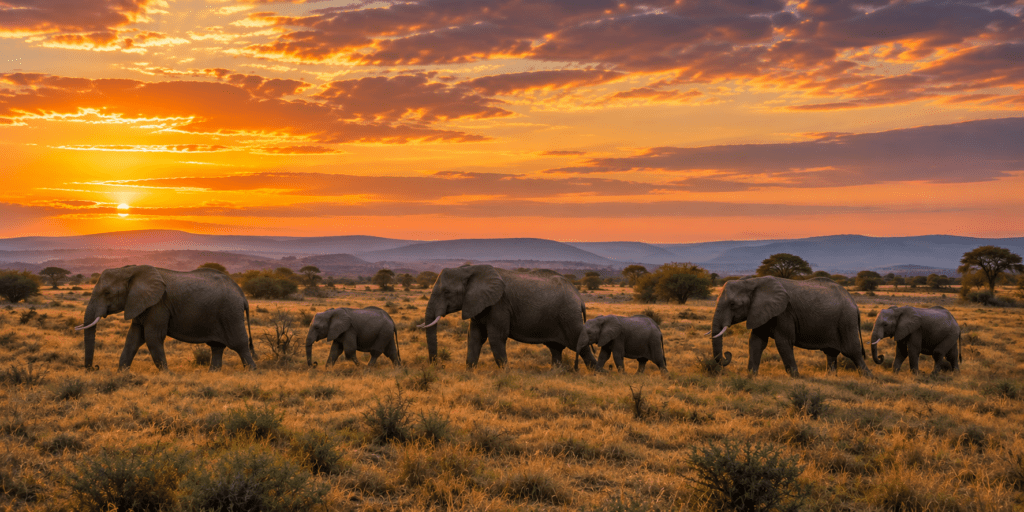
And then there is the moment many travellers have imagined long before they ever arrive in South Africa.
The first time you see an elephant in the wild.
No photograph quite prepares you for the scale of it — or for the silence that can fall over a safari vehicle as an elephant walks slowly through the bush just metres away.
South Africa offers some of the continent’s most remarkable wildlife experiences, from the vast landscapes of Kruger National Park to private reserves and smaller protected wilderness areas across the country.
The famous Big Five may inspire many travellers to go on safari, but the experience quickly becomes about much more than ticking animals off a list.
It is the sound of birds beginning to call before sunrise. Fresh tracks in the dust. A giraffe appearing between the trees. A herd of antelope suddenly becoming alert. The excitement of not knowing what might be waiting around the next bend.
And then there are the quiet moments — stopping beneath an enormous African sky, listening to the bush and realising that nothing here is staged.
The animals decide what happens next.
Perhaps that is what makes safari so unforgettable.
You are not simply observing the landscape.
For a little while, you become part of its rhythm.
Explore Kruger National Park →
The Drakensberg — Where the Mountains Touch the Sky
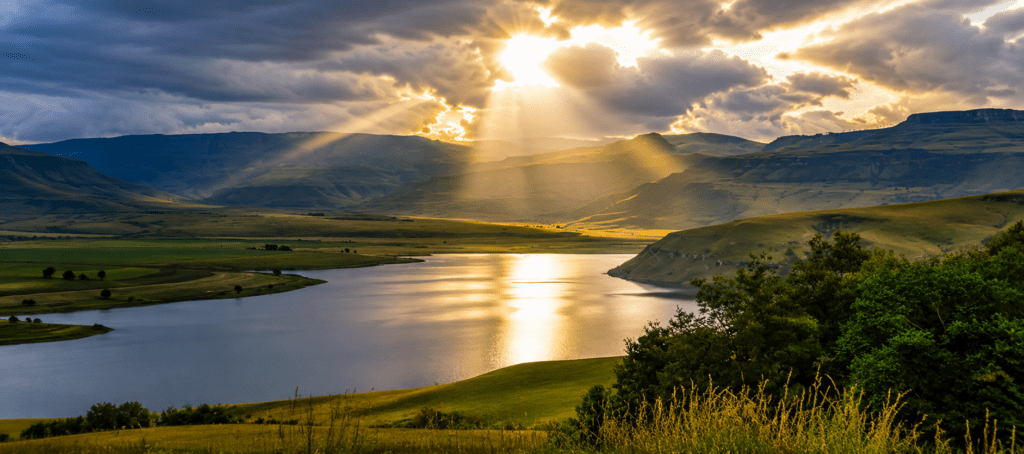
Rising dramatically above the valleys of KwaZulu-Natal, the Drakensberg reveals yet another side of South Africa.
Here, enormous sandstone cliffs, deep green valleys, waterfalls and soaring mountain peaks create a landscape that feels far removed from the country’s beaches, vineyards and bushveld.
For travellers who love the outdoors, this is one of South Africa’s great walking destinations. Hiking trails range from gentle routes through valleys and foothills to challenging mountain adventures, rewarding walkers with sweeping views, hidden waterfalls, dramatic escarpments and an extraordinary sense of wilderness.
And the mountains change with the seasons.
Summer brings green valleys, flowing rivers and dramatic afternoon skies. Winter is quieter and often beautifully clear, and when cold fronts sweep across the mountains, snow can transform the highest peaks into a scene many first-time visitors never expected to find in South Africa.
The Maloti-Drakensberg Park is a UNESCO World Heritage Site, recognised both for its extraordinary natural landscape and its remarkable concentration of San rock art.
But the Drakensberg is more than one of South Africa’s most beautiful landscapes.
For me, it is also part of home.
My grandparents had a farm near Bell Park Dam, in the Champagne Valley of the Central Drakensberg, and some of my happiest childhood holidays were spent here.
These mountains were my playground.
I remember the enormous landscapes, the freedom of being outdoors, and the way the mountains seemed to change with the seasons. It is a part of South Africa that became woven into my childhood long before I understood how extraordinary it really was.
Perhaps that is why this landscape will always feel different to me.
I don’t only see a beautiful destination.
I see a piece of my childhood.
Explore the Drakensberg →
South Africa by Rail — The Journey Becomes the Destination

There are many ways to travel across South Africa.
But few allow you to watch the country unfold quite like a journey by rail.
From the comfort of an elegant carriage, cities slowly disappear into farmland, mountains rise beyond the windows and vast stretches of countryside pass by at a pace that allows you to actually notice them.
South Africa is home to two of the world’s celebrated luxury rail experiences. Rovos Rail evokes the romance of an earlier era of travel, with beautifully restored carriages and journeys that cross some of Southern Africa’s most remarkable landscapes. The Blue Train offers another distinctly South African experience, combining elegant onboard hospitality with the changing scenery between Pretoria and Cape Town.
But perhaps the greatest luxury of travelling this way isn’t found inside the train at all.
It is time.
Time to sit beside a window. Time to watch the landscape change. Time for conversation over dinner. And time to enjoy the journey rather than simply waiting to arrive.
In a country as vast and varied as South Africa, sometimes slowing down is one of the best ways to see more.
Discover why luxury rail travel is making a comeback →
Come for the Landscapes. Remember the People.

South Africa’s landscapes may be what first capture your attention, but a journey here is about far more than scenery.
This is a country shaped by an extraordinary diversity of cultures, languages, histories and traditions, and travelling through South Africa means encountering that diversity in countless different ways.
Sometimes it happens through food.
It might be the spices and flavours of Cape Malay cooking in Cape Town, a braai shared outdoors, fresh seafood beside the coast, a farm stall discovered on a road trip, traditional dishes prepared from recipes passed through generations, or a long lunch accompanied by a bottle of South African wine.
Sometimes it happens through conversation.
A guide sharing stories about the landscape. A winemaker explaining the history behind an estate. Someone recommending a place you hadn’t planned to visit. A conversation in a small town that lasts longer than expected.
And sometimes it is simply found in the rhythm of everyday South African life — markets, music, languages, neighbourhoods, celebrations and the different communities that give each part of the country its own character.
South Africa is complex. Its history is complex too. Travelling here offers an opportunity not only to admire extraordinary places, but also to listen, learn and understand something about the people and stories that shaped them.
The photographs may capture the mountains, wildlife and sunsets.
But often, it is the human moments between them that become part of the story you take home.
Perhaps South Africa Isn’t One Journey
Perhaps the most difficult thing about planning a journey through South Africa is deciding which South Africa you want to discover first.
It could be Cape Town and the Winelands, with mountain views, coastal drives and long afternoons among the vineyards.
It could be an open road through the Karoo, where towns become smaller, skies become bigger, and the landscape seems to stretch forever.
It could be springtime in Namaqualand, when an otherwise quiet landscape suddenly bursts into colour.
It could be your first morning on safari, watching the African bush slowly come alive as the sun rises.
Or perhaps it is standing beneath the mountains of the Drakensberg, travelling across the country aboard a luxury train, following the Garden Route beside the ocean, or discovering somewhere you hadn’t even considered before you arrived.
And that may be South Africa’s greatest invitation.
You don’t have to experience everything in one journey.
Come for one part of the country, and you may leave already thinking about the next.
Because there isn’t one perfect way to experience South Africa.
There is the South African journey that is perfect for you.
Your South African Journey Starts Here
From Cape Town and the Winelands to unforgettable wildlife encounters,
mountain escapes and journeys across the open road,
South Africa can be experienced in countless ways.
Let Seat2Sky create a journey shaped around the places,
experiences and moments that matter to you.